Marzena Ugorna Farm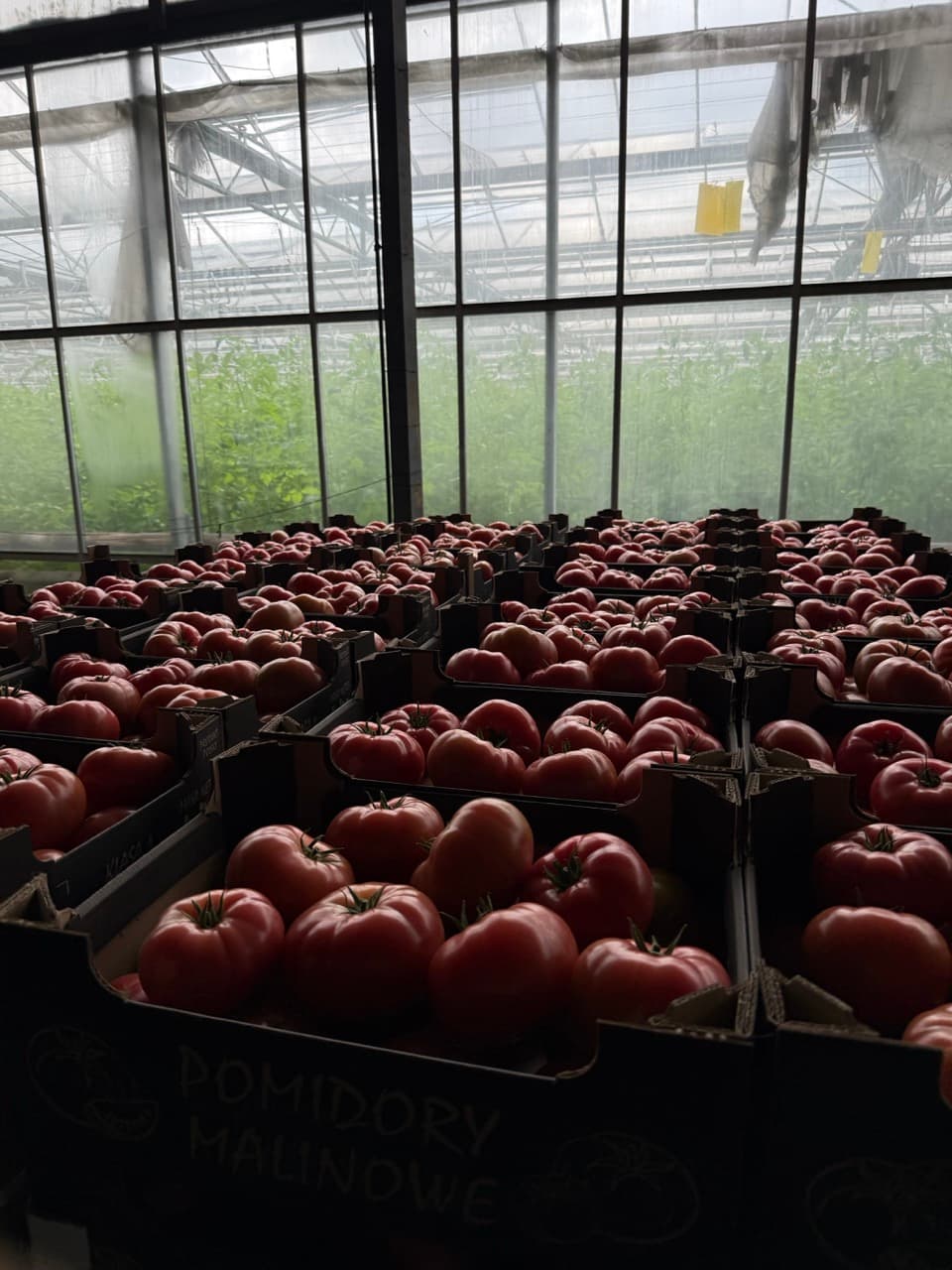
What happens to flavour in a long supply chain
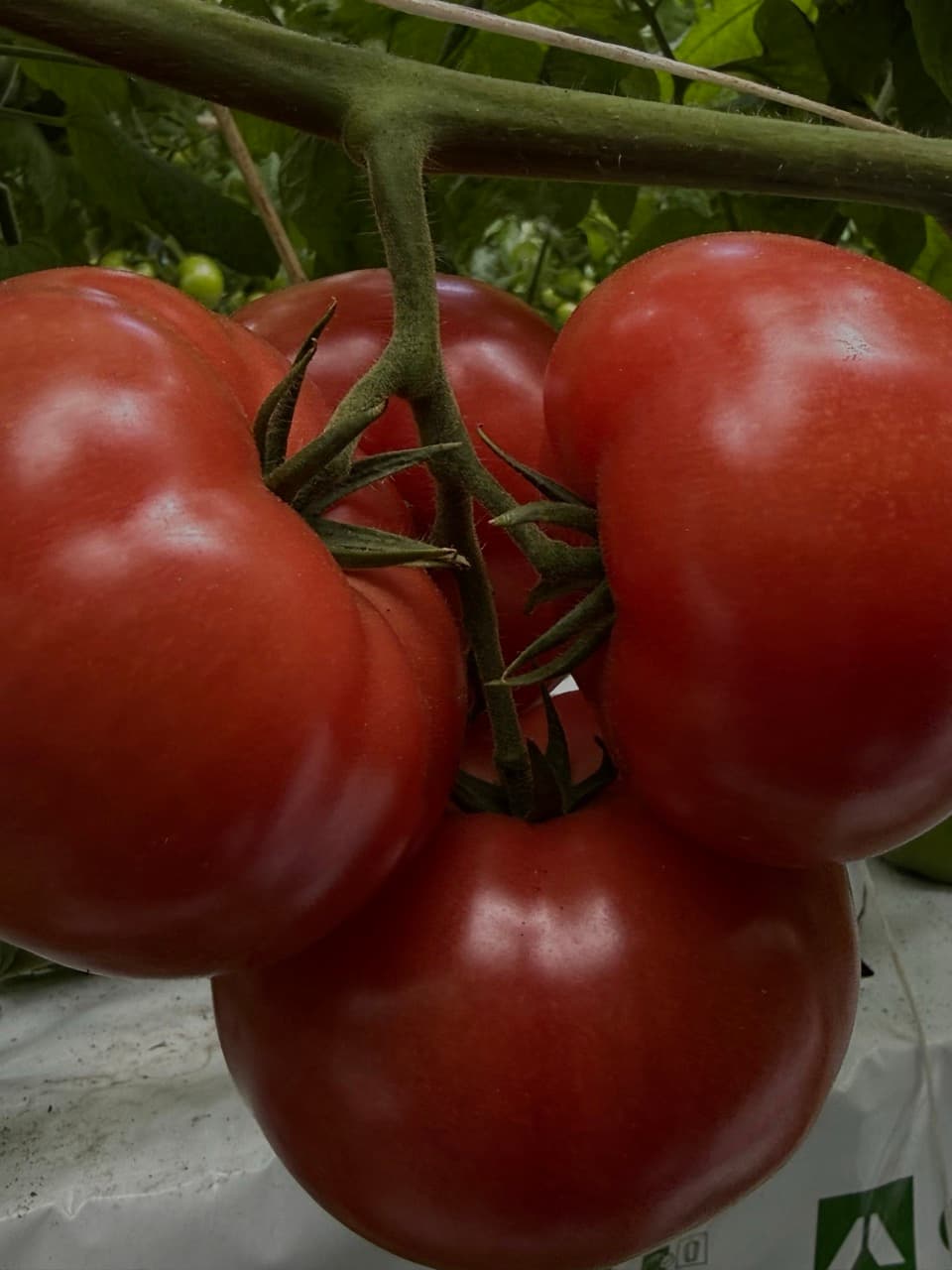
Tomato flavour is primarily determined by the balance of sugars, acids and volatile aromatic compounds that develop during ripening. All three continue to develop on the vine. Once a tomato is harvested, the process slows dramatically and eventually reverses.
Tomatoes harvested for long-distance export are typically picked at what is called "mature green" — fully sized but not yet ripe. They are then transported in refrigerated containers and ripened at distribution centres using ethylene gas. This produces colour, but the sugars, acids and aromatics that give a great tomato its character simply are not there.
The Greater Poland advantage
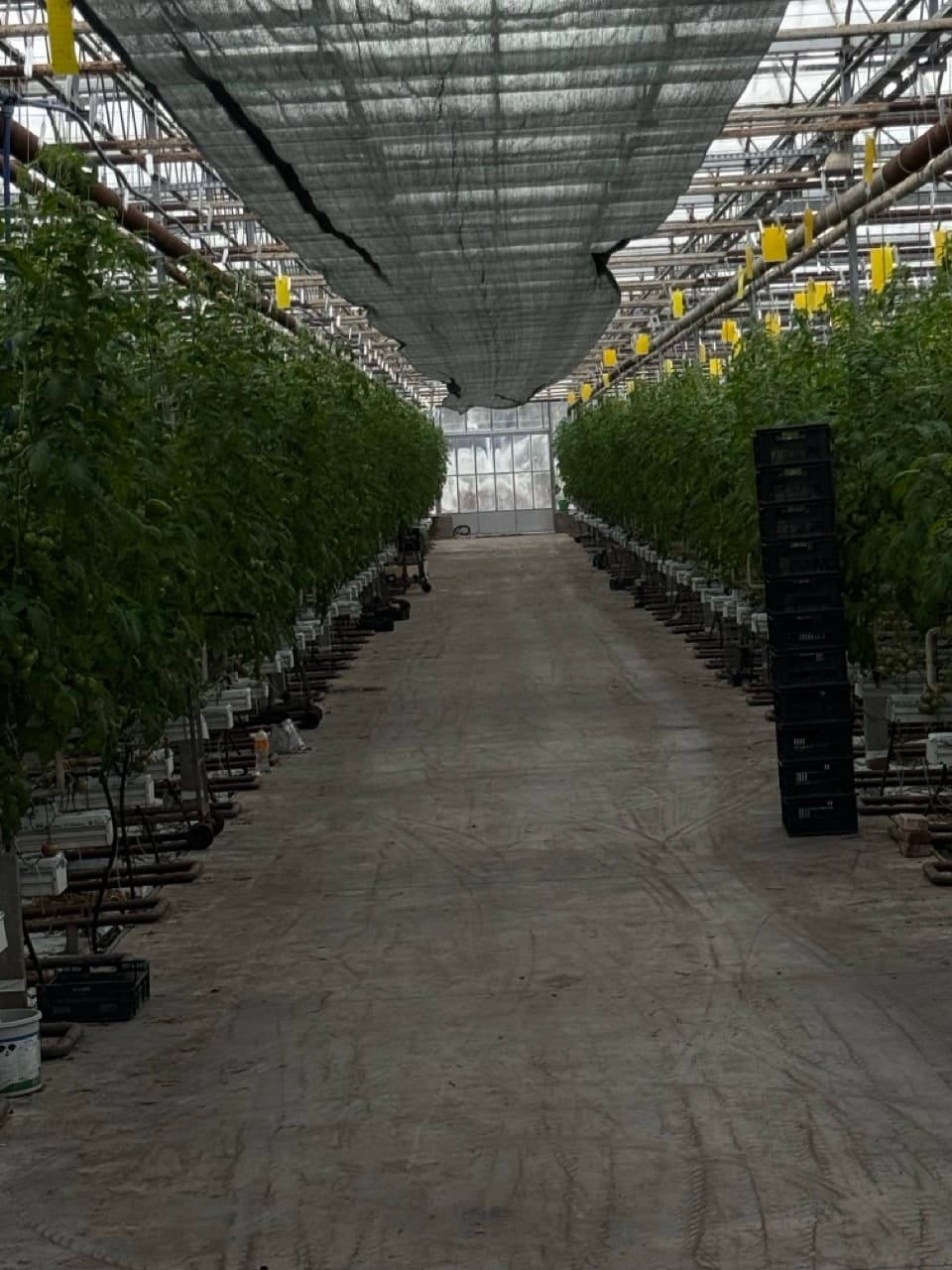
Greenhouse growers in the Kalisz area supply markets in Warsaw, Poznań, Łódź and Wrocław — all within a 150–300km radius. This means tomatoes can be harvested ripe, transported overnight and available the following morning without any cold chain compromise.
The same journey that takes a Spanish tomato three weeks — being picked green, cooled, shipped, gassed, distributed — takes a locally grown tomato less than 48 hours. By the time it reaches the customer, it has lost very little of what was developed on the vine.
The environmental dimension
A shorter supply chain also has a smaller environmental footprint. Freight transport from Southern Europe or North Africa generates significant CO₂ emissions per kilogram of product. A local supply chain means lower transport emissions, less refrigeration energy and reduced packaging requirements.
Buying from local producers is not merely a flavour decision — it supports a regional food system that is more resilient, more sustainable and better for the communities that depend on it.
For restaurants: the professional case
For a professional kitchen, the advantages of local supply go beyond flavour. Knowing exactly where your produce comes from, having a direct relationship with the grower, and being able to communicate specific requirements — these are advantages that no large distributor can replicate.
A chef who visits the greenhouse understands the product in a way that no supplier catalogue can convey. That relationship also creates accountability: both parties care about the quality because both parties know each other.
Frequently asked questions
- Are locally grown tomatoes always better than imported ones?
- Not always, but they have a structural advantage in freshness. A locally grown tomato that is harvested at full ripeness and delivered within 24–48 hours will almost always be fresher and better-flavoured than an imported tomato that was harvested weeks earlier. The growing conditions and variety also matter.
- Where can restaurants in Warsaw source local tomatoes from Greater Poland?
- Several specialist growers in the Kalisz and Poznań areas supply directly to Warsaw restaurants. Direct producer relationships are the most reliable approach. Specialty food distributors focused on local produce are another option. Contact us to discuss supply arrangements.
- What months are best for Polish greenhouse tomatoes?
- Polish greenhouse tomatoes are at their peak from May through October, with July–September producing the best fruit thanks to high natural light. Some growers extend production into November and December, though quality is typically lower due to reduced daylight.
Contact us to discuss direct supply from our farm near Kalisz.
Get in touch →