Marzena Ugorna Farm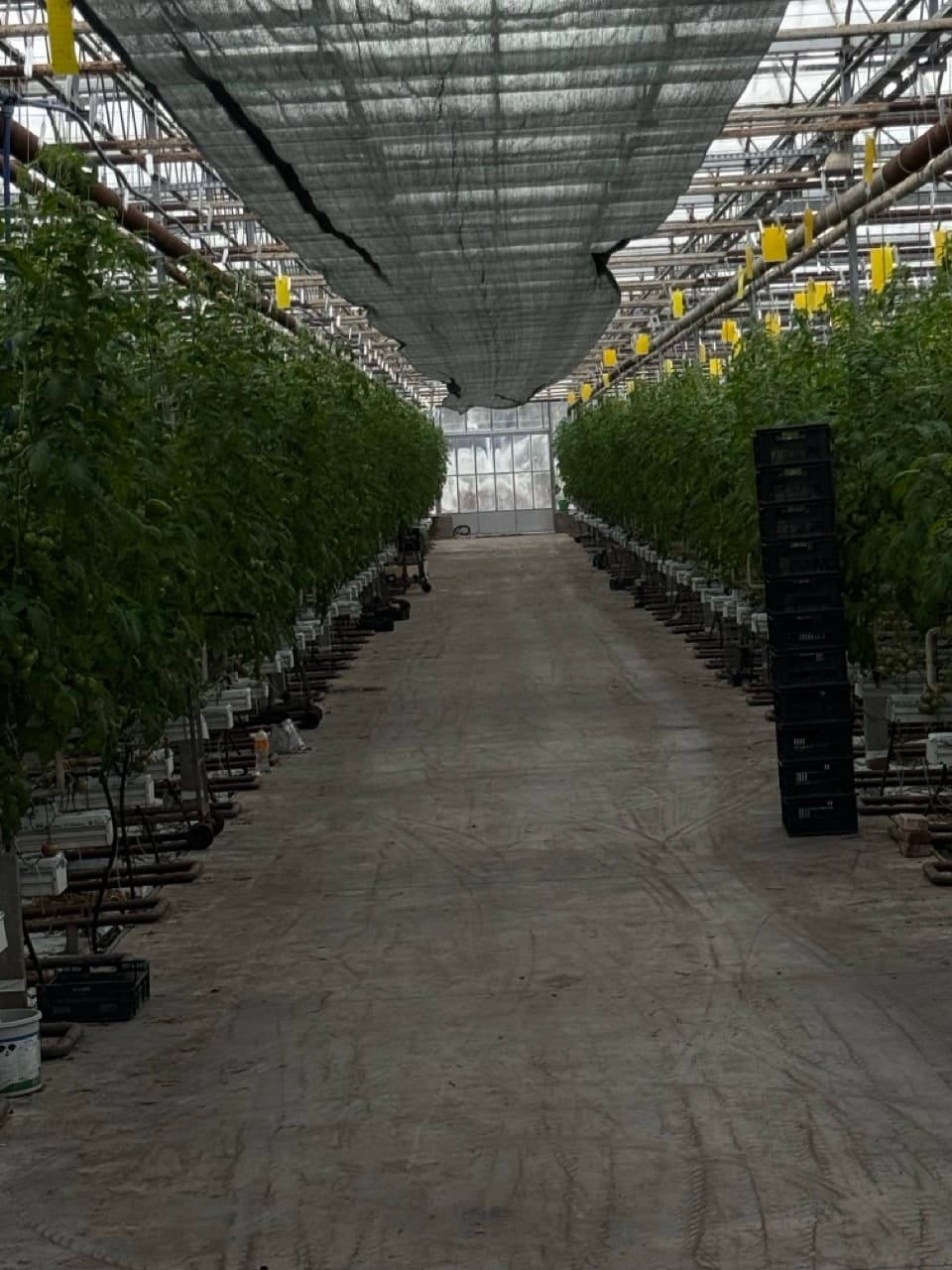
The misconception about greenhouse tomatoes
The idea that greenhouse tomatoes lack flavour comes largely from mass-market production, where greenhouses are run for yield and year-round consistency rather than taste. Enormous growing facilities with artificial lighting, hydroponics and fast turnover optimise for volume, not quality.
Small-scale greenhouse growers who focus on flavour operate very differently. Controlled environment is an advantage when that control is used to support the plant, not merely to maximise output.
How a greenhouse improves quality
A greenhouse allows a grower to manage temperature, humidity and ventilation with precision. This means plants experience less stress from temperature extremes, wind, heavy rain or drought — all of which can damage flavour development in field-grown tomatoes.
Protection from pests and disease also means fewer interventions are needed. In our greenhouse near Kalisz, we use integrated pest management to minimise any inputs, letting the plant concentrate its energy on fruit development rather than defence.
The role of vine ripening
The most important factor in tomato flavour is how long it stays on the vine. Sugars, acids and aromatic compounds all develop in the final stages of ripening — stages that are often cut short when tomatoes need to travel long distances.
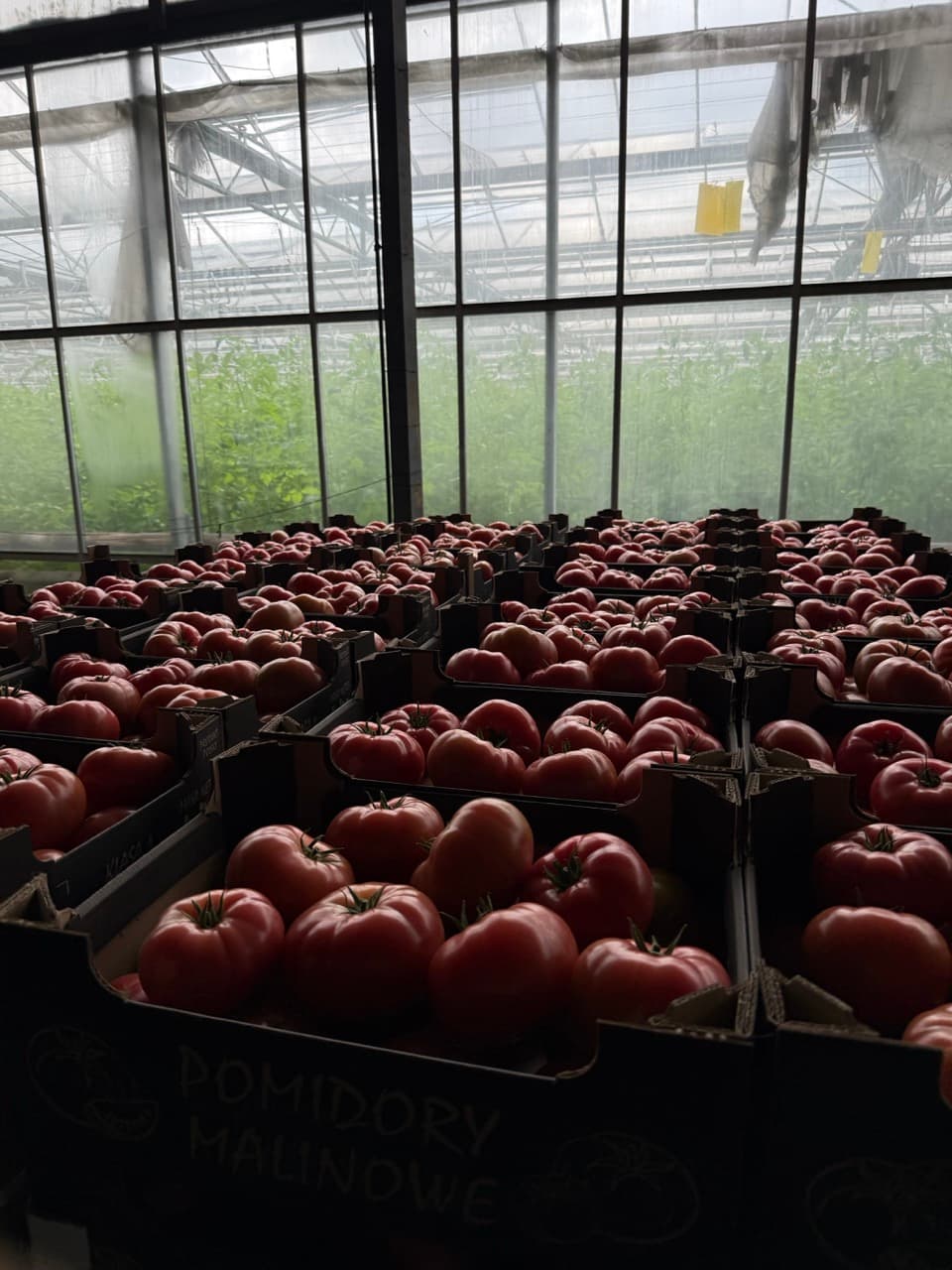
A greenhouse grower who supplies locally can allow tomatoes to reach full vine-ripeness before harvest, because they do not need to survive a three-week journey in a refrigerated container. This is the single largest quality advantage of local greenhouse production.
Season and variety still matter
Even in a greenhouse, the long summer days of Polish summer produce better tomatoes than mid-winter. The combination of natural light and controlled environment during peak growing months — May through September — yields fruit with more flavour than any other period.
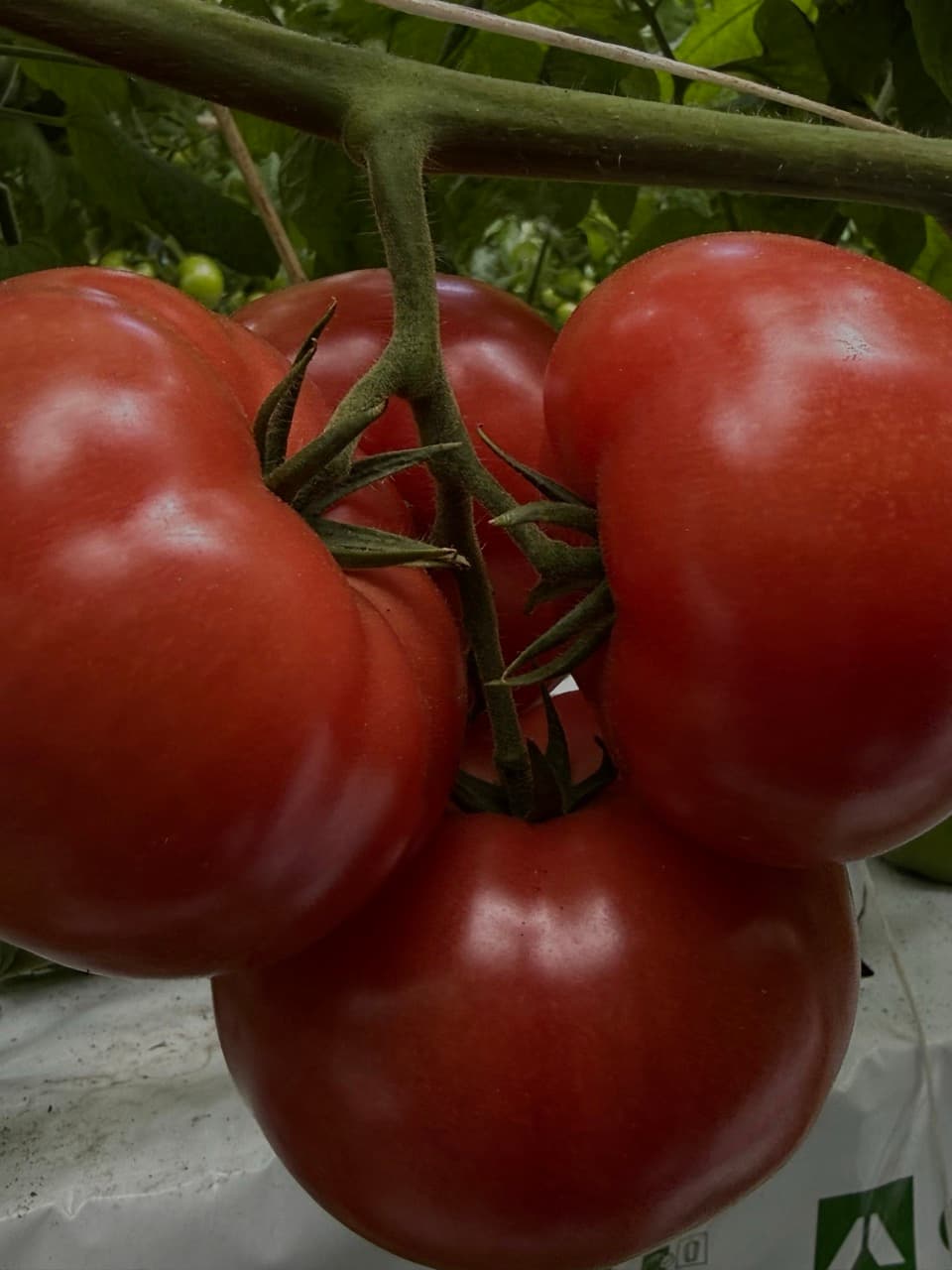
Variety selection also plays a crucial role. Heritage and semi-heritage varieties like malinowe are grown for flavour rather than shelf life or appearance uniformity. They are more delicate to grow, but the result is incomparable.
What to look for in quality greenhouse tomatoes
When buying greenhouse tomatoes, ask about growing practices and harvest dates. A grower who is proud of their product will always be able to answer these questions. Look for irregularity in shape — perfectly uniform tomatoes are often a sign of industrial production.
Locally grown greenhouse tomatoes with a known harvest date are almost always better than imported alternatives, regardless of the country of origin. Proximity to harvest is the most reliable indicator of freshness and flavour.
Frequently asked questions
- Are greenhouse tomatoes less nutritious than field-grown?
- Not significantly, provided they are vine-ripened. The key nutritional compounds — lycopene, vitamin C, carotenoids — develop during ripening. A vine-ripened greenhouse tomato is nutritionally comparable to a vine-ripened field tomato. The difference comes mainly from harvest timing, not growing method.
- Can greenhouse tomatoes be organic?
- Yes. Organic certification applies to growing inputs (fertilisers, pesticides), not to the structure used. Many small greenhouse operations grow without synthetic inputs, though formal organic certification has administrative costs that some small farms choose not to pursue.
- Why do some greenhouse tomatoes taste so much better than others?
- The main differences are variety selection, harvest timing, growing scale and supply chain length. Small operations focused on quality, harvesting vine-ripe fruit and selling locally, consistently produce better-tasting tomatoes than large industrial facilities optimised for yield.
Learn about our greenhouse and how we grow our tomatoes near Kalisz.
Get in touch →